Hangzhou 3-Day Itinerary for First-Time Visitors
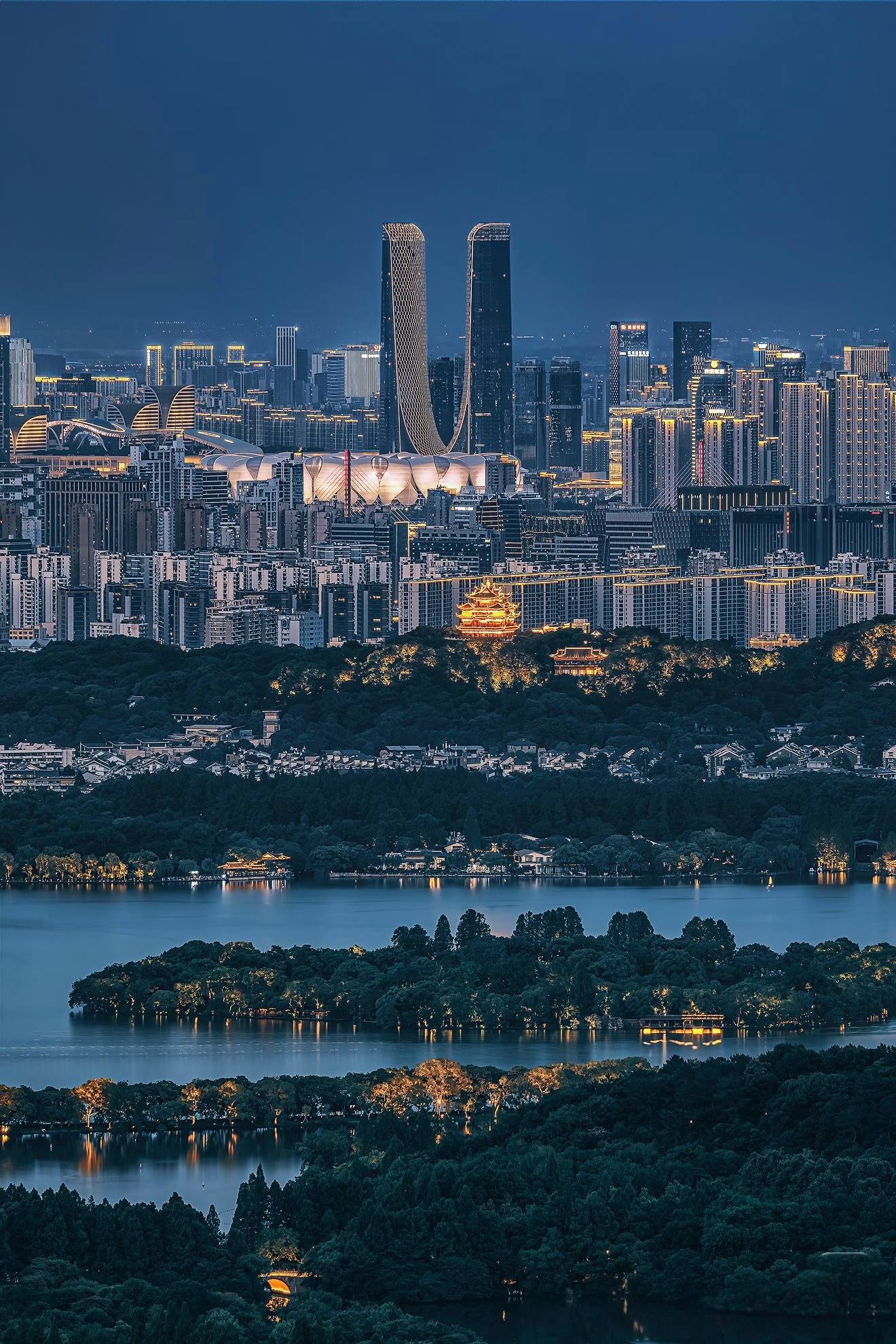
Every friend who visits me in Hangzhou asks the same question: "What should I actually do?" This is the answer — the exact 3-day plan I've refined across a dozen visits from family and friends. It works. It's not too much, not too little. It covers the must-sees without turning your trip into a checklist sprint. And it's built around the single most important rule of visiting Hangzhou: start early.
The difference between a mediocre Hangzhou trip and a great one is usually about 90 minutes. Wake up at 6:30 instead of 8:30, and you get West Lake to yourself. Sleep in, and you get selfie sticks and matching tour-group hats. The itinerary below is written for the early riser — but don't worry, there's plenty of downtime built in.
Before You Go
Three things to sort out before you land. Each takes 15 minutes and saves you an hour of frustration.
- Alipay with a linked foreign card. You'll use it for metro, shared bikes, street food, and literally everything else. Full setup guide →
- A working VPN or eSIM with uncensored data. Google, Instagram, WhatsApp — all blocked. Set it up before you fly. VPN guide → eSIM guide →
- A map app that actually works in China. Amap (高德地图) or Apple Maps with China region. Google Maps is useless here. Full apps guide →
Send Me the Free Checklist →
West Lake by Bike + Old City at Night
Start 6:30 AM End ~10 PM

Morning: The Lake Loop
Grab a shared bike (Hellobike or Meituan — unlock with Alipay scan, ¥1.5–3) by 7:00 AM and ride the full 12 km lake loop. At sunrise the Su Causeway is almost empty: peach trees, willow fronds, six stone bridges, mist on the water. Stop at the Bai Causeway and Broken Bridge, then pedal up to Solitary Hill for the view back across the lake. By 10 AM the tour groups arrive and the magic fades, so that's your cue to leave. How to rent a shared bike →
Midday: Rest and Wander
Head back to your hotel to shower and change. Grab a casual lunch nearby — a bowl of 片儿川 (piàn'ér chuān, Hangzhou-style noodle soup with pickled vegetables and pork, ~¥20) at any local noodle shop. The lanes behind the lake, especially around Qingbo Gate and Nanshan Road, are good for a post-lunch wander.
Late Afternoon & Evening: The Old City Quarter
Start at Southern Song Imperial Street (南宋御街) around 4:30 PM. Walk south through Hefang Street when the lanterns come on around 5:30–6:00 PM, then cut north into Dama Lane (大马弄) and Shiwukui Lane (十五奎巷) for street food and real market life. These two lanes are where locals actually shop for dinner — wet markets, pickle vendors, roasted duck hanging in windows. Continue north through the old lanes into Gongshu District.
Dinner Grab food from 3–5 different stalls at Wulin Night Market (武林夜市) — 葱包烩 (scallion wraps), sticky rice lotus root, skewers. Don't sit down for one meal; eat five small things from five different stalls. Open ~17:00–23:00, walk from West Lake in 10 minutes.
Tea Villages + Lingyin Temple
Start 7:30 AM End ~8 PM
Morning: Lingyin Temple (灵隐寺)
Arrive by 8:00 AM on a weekday. One of China's largest Buddhist temples, tucked into forested hills for 1,700 years. The Feilai Feng grottoes — hundreds of Buddhist carvings in limestone cliffs — are the real highlight. Entry is free with real-name reservation; at time of writing, reserve at least one day ahead through the "杭州灵隐飞来峰" mini program in Alipay or WeChat. Check the current rules before you go — reservation policies change. Weekends are extremely crowded due to free entry; weekday morning is the move. More on Lingyin →
Lunch The vegetarian noodle restaurant inside the temple grounds is genuinely good — not a tourist trap. Simple, clean, and a fitting meal after walking the halls.
Afternoon: Tea Villages
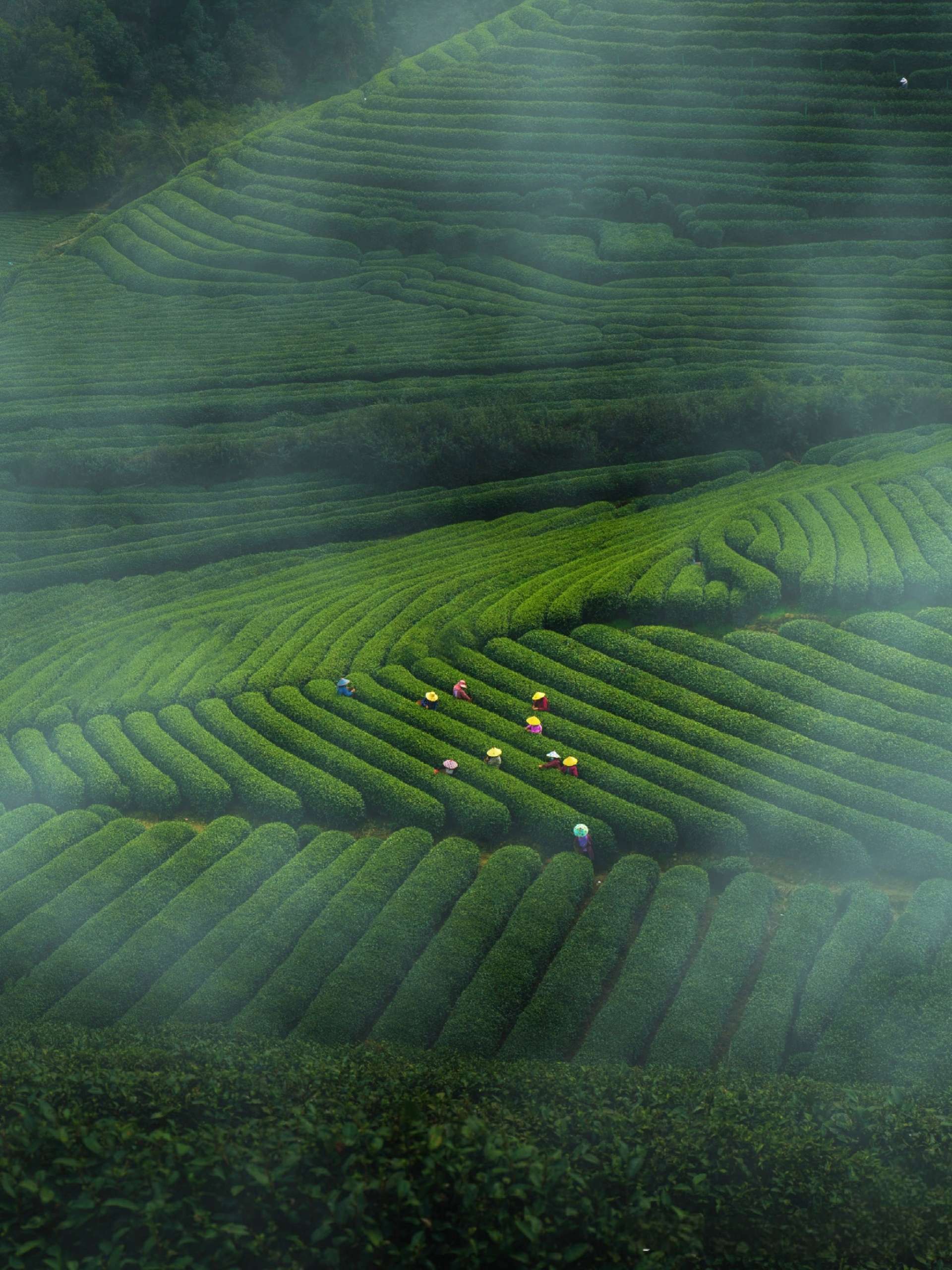
Take a 20-minute taxi (DiDi, ~¥30–40) to Meijiawu (梅家坞). Terraced tea fields, family-run restaurants with tables between the rows, farmers roasting leaves in iron woks. Order a pot of Longjing tea (~¥50–80), a few home-style dishes (try the tea-infused chicken and the local greens), and sit until the light turns golden over the hills. This is the Hangzhou people mean when they say it's beautiful.
If you're up for more, Longjing Village (龙井村) is a 15-minute walk uphill — smaller, quieter, and the tea is arguably better. Ask your Meijiawu host for directions; the path between the two villages is half the experience.
Dinner Stay in the tea hills for dinner if the weather is good. Otherwise, taxi back to town and try 老头儿油爆虾 (Old Man's Oil-Blasted Shrimp) at Shengli River Food Street — a Hangzhou institution. Their signature dish is river shrimp flash-fried with soy and ginger. Hangzhou food guide →
Modern Hangzhou + Grand Canal Evening
Start 8:30 AM End ~10 PM
Morning: The Other Side of the River
Take Metro Line 1 across the Qiantang River to Binjiang District. Walk the riverfront promenade — the downtown skyline reflected in the water is the modern Hangzhou most tourists never see. Grab coffee at a café in the tech district. This is where Alibaba, NetEase, and hundreds of startups live; the energy is completely different from the west side of the river. More on Hangzhou neighborhoods →
Afternoon: Gongshu District & Canal Lanes
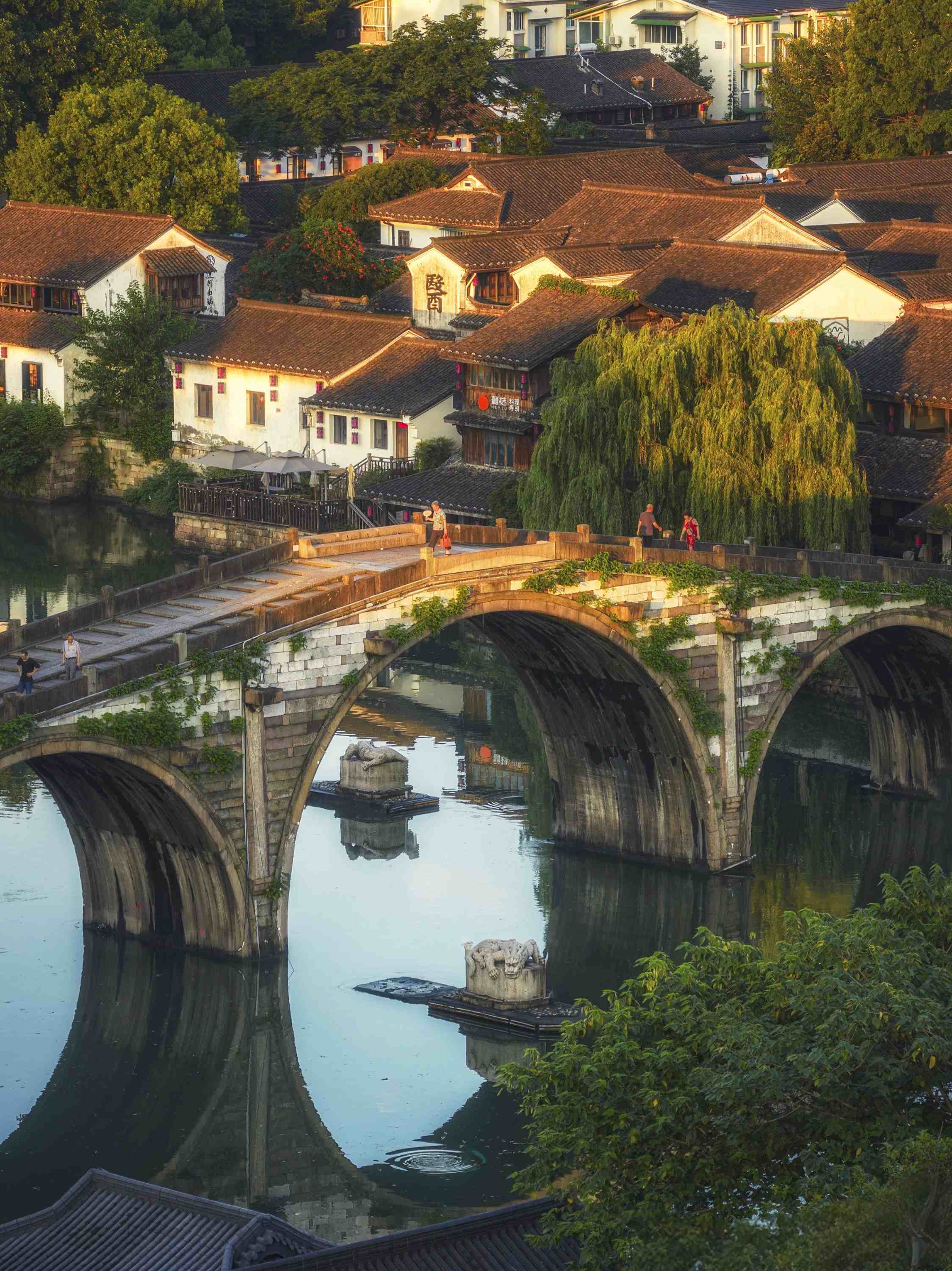
Head back across the river to Xiaohe Straight Street (小河直街) — a preserved canal-side lane with small shops, tea houses, and a slower pace than anywhere near West Lake. Walk the narrow lanes, browse the pottery and craft shops, stop for tea at a canal-side house. From Xiaohe, walk north along the canal toward Gongchen Bridge (拱底桥) — the ancient stone bridge that marks the southern terminus of the Grand Canal. Arrive around 5:30 PM to catch the bridge at dusk as the lights come on.
Evening: Canal-Side Dinner
Dinner Shengli River Food Street (胜利河美食街) — thirty-odd restaurants lining the canal, red lanterns strung between whitewashed buildings. Grab an outdoor table by the water. Order cold beer, a few dishes to share, and watch the boats drift past. End with a walk along the canal when all the lanterns are on — it's one of the best night views in the city, and almost no tourists make it up here. More night markets →
If You Have More Days (or Fewer)
4–5 days: Add a day trip to the Xixi Wetlands (西溪湿地) — a massive wetland park with boat rides through reeds and quiet villages. Also worth adding: a morning at the China National Silk Museum (free, world-class) and more time wandering the tea hills. 2 days: Skip Binjiang entirely, do Day 1 as written, and combine Lingyin with the tea villages into a single afternoon rush (less ideal but doable). 1 day: Bike the lake at sunrise, visit Lingyin, eat at a tea village, done. You'll miss half the city but you'll get the essence.
Common Mistakes to Avoid
- Trying to "do West Lake" in 2 hours. It's a 12 km loop with dozens of stops. Budget at least a full morning, ideally longer.
- Going to Lingyin Temple on a weekend at 10 AM. You'll spend the whole time in a crush of people.
- Staying near the train station because it's "convenient." Hangzhou East Railway Station is transport infrastructure, not a neighborhood. Stay near the lake or in Gongshu. Neighborhood guide →
- Expecting to pay with a foreign credit card everywhere. Small restaurants and tea houses take Alipay or WeChat Pay. Set up Alipay before your trip. Guide here →
- Not checking the weather. Hangzhou in summer means 35°C and 90% humidity. Bring water, wear light clothing, and don't plan midday outdoor activities in July–August.
- Skipping the tea villages because "it's just tea." The tea villages are the single best experience in Hangzhou. Don't skip them.
📋 Get the Complete China Arrival Checklist
Alipay setup, VPN, eSIM, and the exact steps for your first 48 hours in China — free, no spam.
Send Me the Checklist →